The Rieusset portrait two restorers declined
A 1923 oil painting measuring 210 × 125 cm: a weakened support, a failed earlier intervention and a solution designed for the painting.
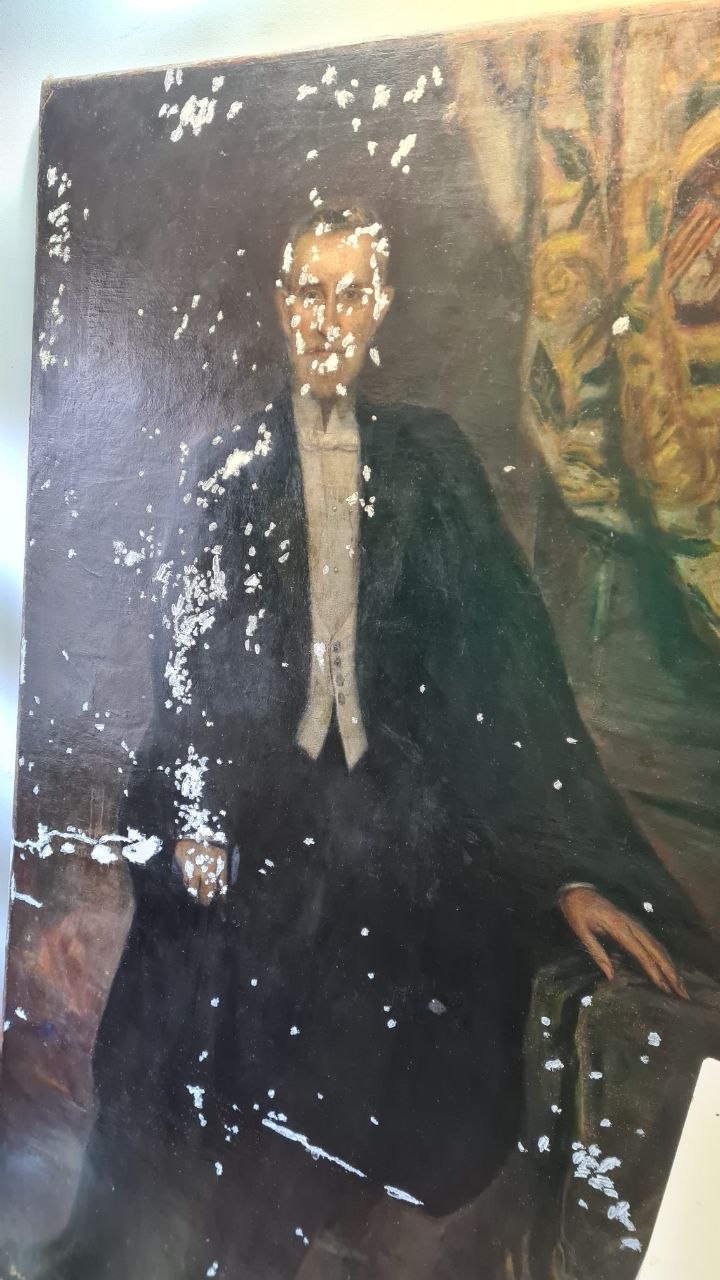
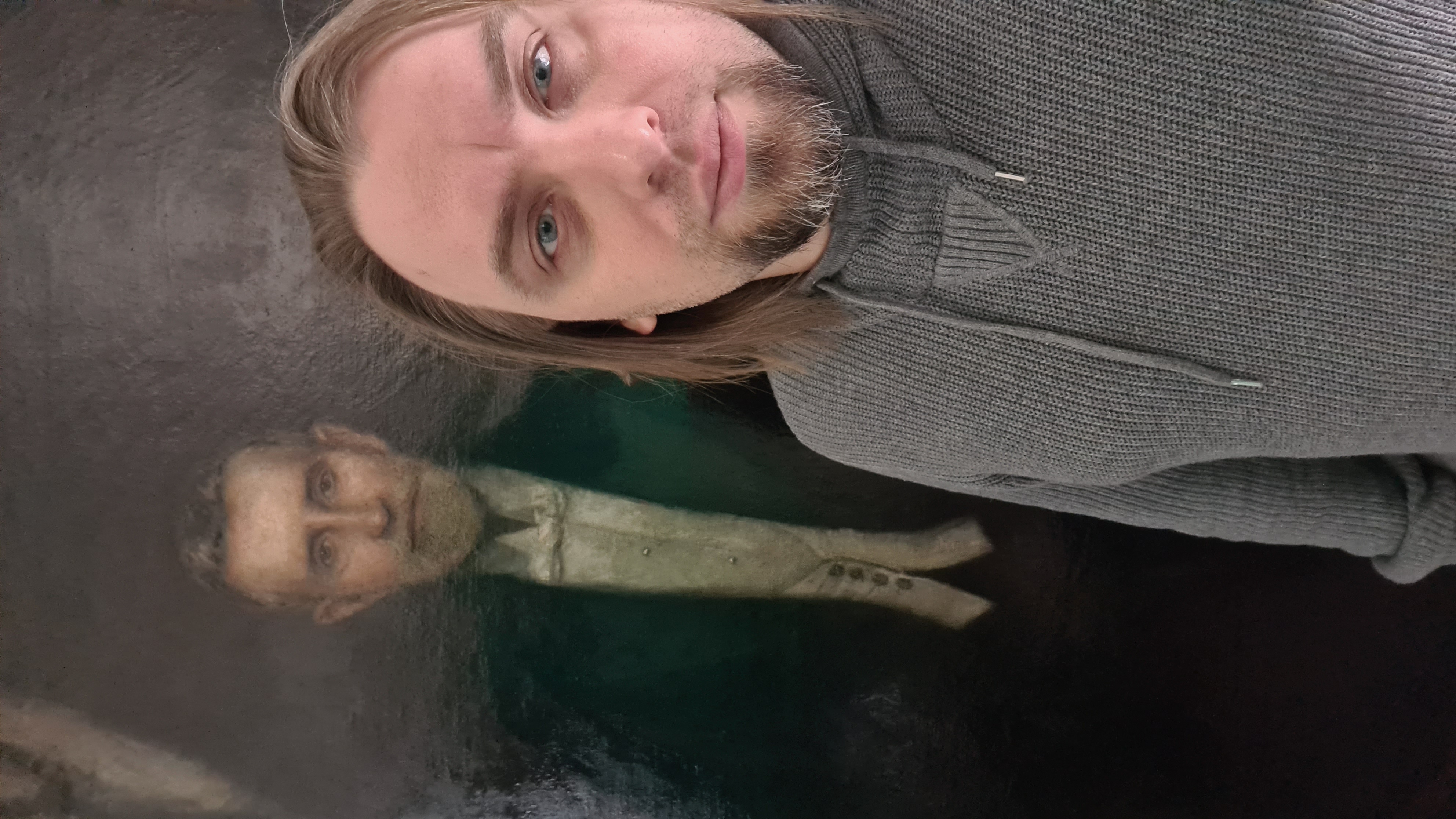
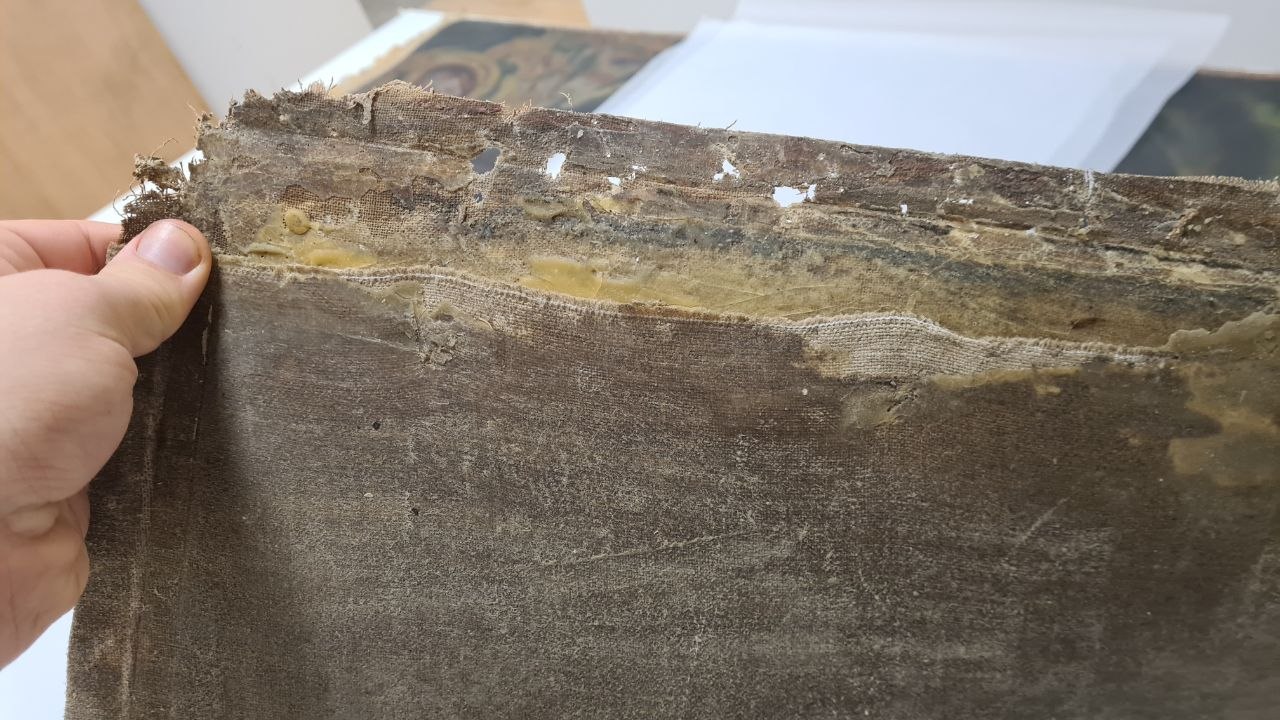
This portrait of Josep Rieusset, founder of the historic Rieusset factory, was painted by Sangroniz in 1923. It is an oil painting on linen, measuring 210 × 125 cm, with paint losses, cracks, weakened areas of fabric and earlier repairs. A plywood sheet covered the back, concealing part of the support’s condition.
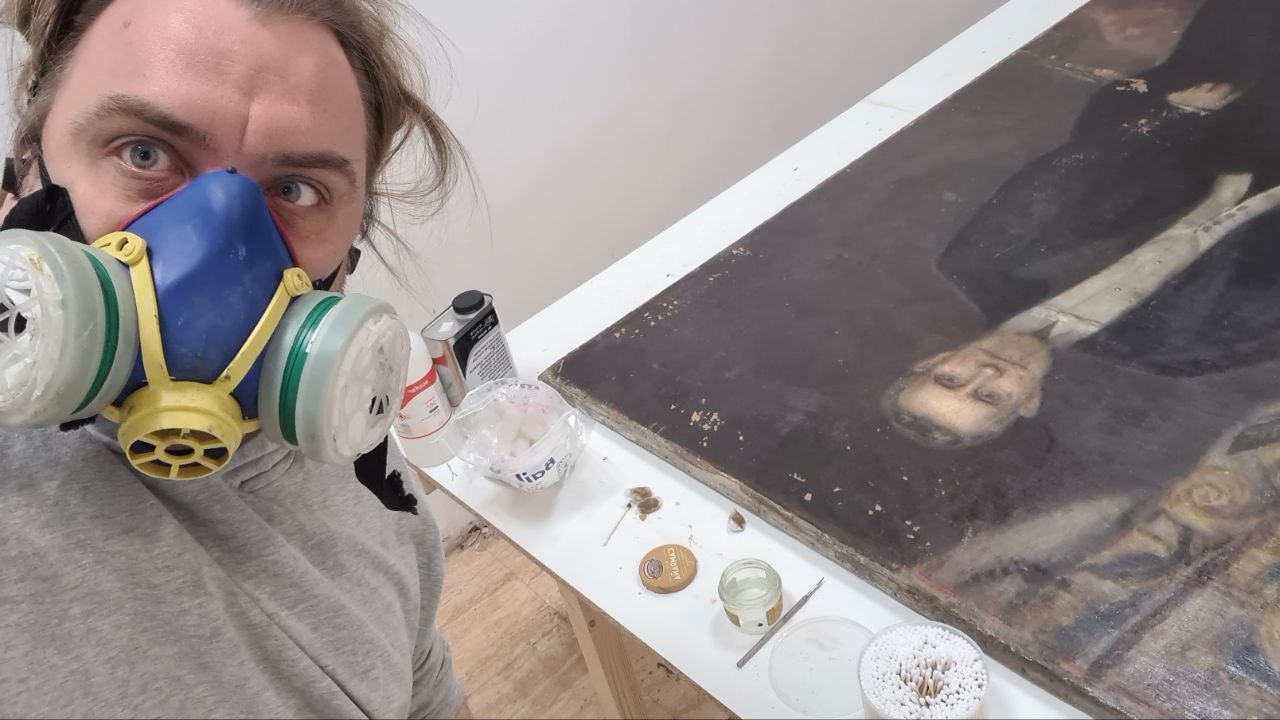
Two restorers had declined the commission before it reached my studio. The challenge was not to repeat a familiar procedure: it was to understand what an exceptionally large, fragile painting needed, design a safe way to work on it and find solutions as new problems emerged.
A painting beyond standard dimensions
At 210 × 125 cm, the canvas was larger than a typical restoration worktable. To handle it safely, I designed an adjustable working support for the painting and planned the handling with assistance during the stages that required it. There was no off-the-shelf setup that worked without modification.
The problem hidden from view
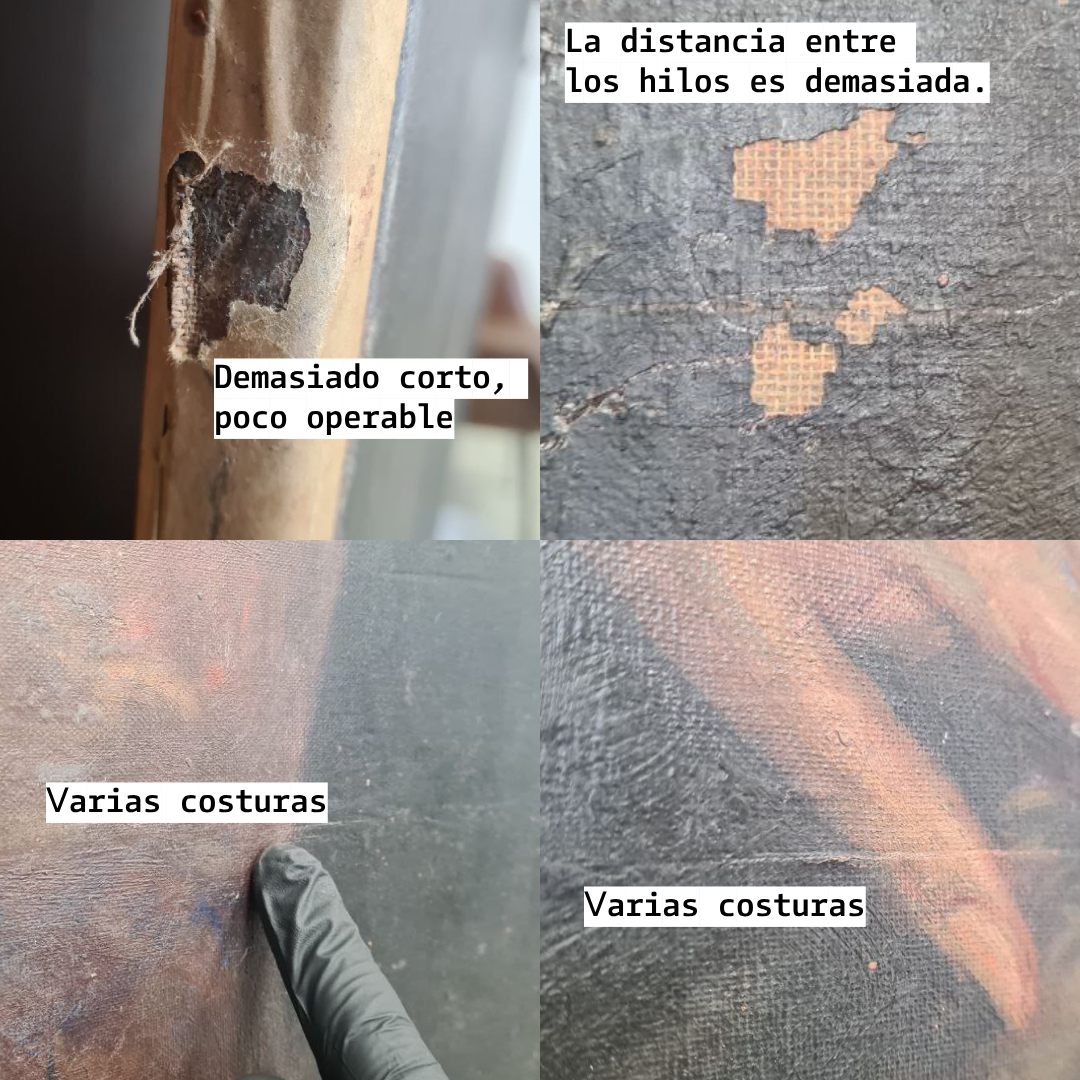
The back was sealed by a sheet of plywood. That made it impossible to inspect the entire support at the outset, so the painting had to be assessed as new areas became accessible.
An earlier intervention had also applied non-original paint directly over the original layer. The two layers had bonded together. Removing the later paint without lifting the original required a cautious approach, with each step guided by the painting’s response.
Two restorers who assessed the commission before me declined it. I took it on because it was challenging, not because it was easy: each obstacle could be analyzed and addressed with a solution designed for this specific painting. Experience matters, but a case like this also takes curiosity, inventiveness and the ability to rethink the plan when the artwork calls for it.
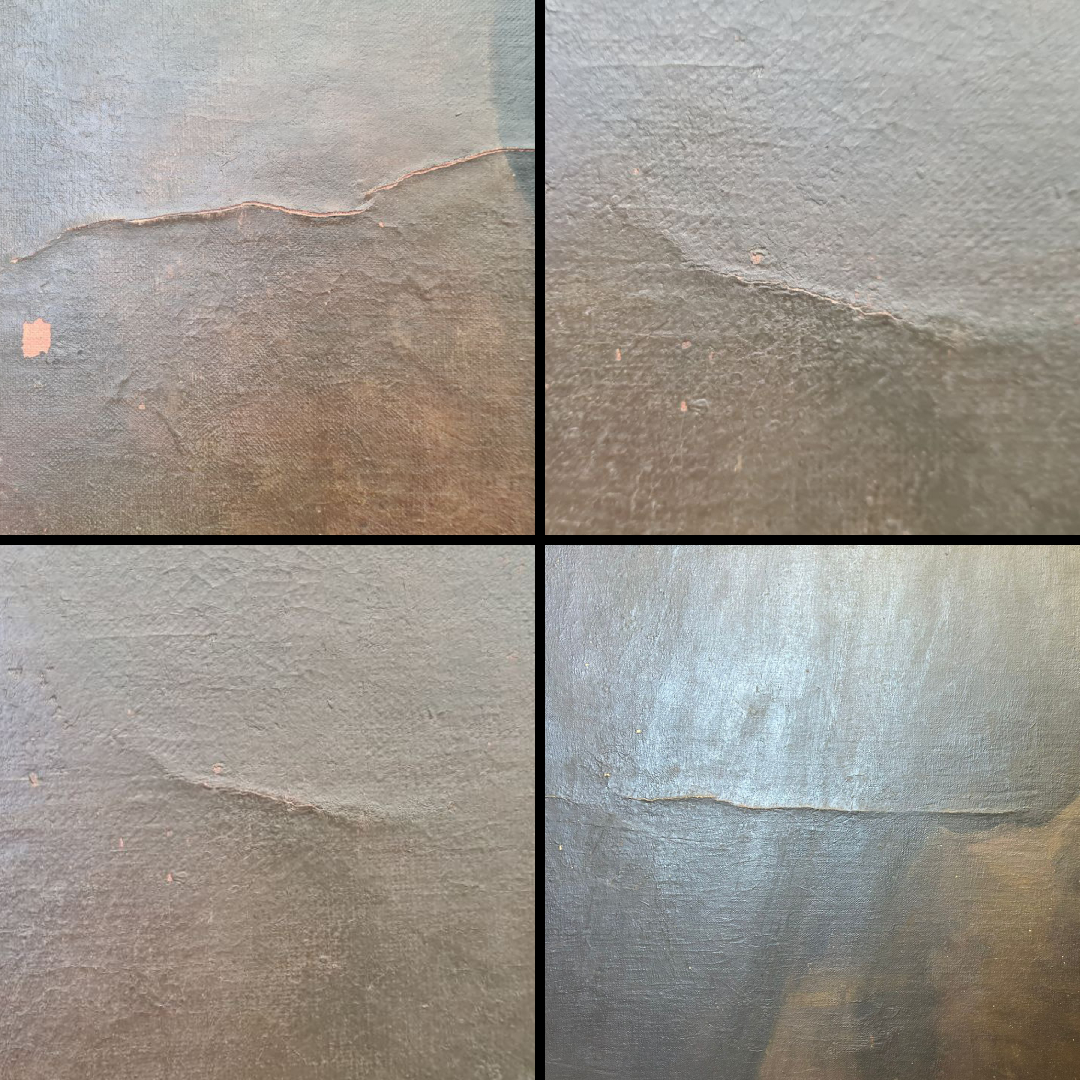
Solve, adapt, reassess
The work combined stabilizing the canvas, reinforcing weakened areas, controlled cleaning and reintegrating paint losses. Retouching was planned to respect the image and character of the portrait, rather than applying one fixed solution everywhere.
The full project took between two and three months. The setup and handling were planned around the painting’s exceptional size, and the completed work was documented with photographs and video.
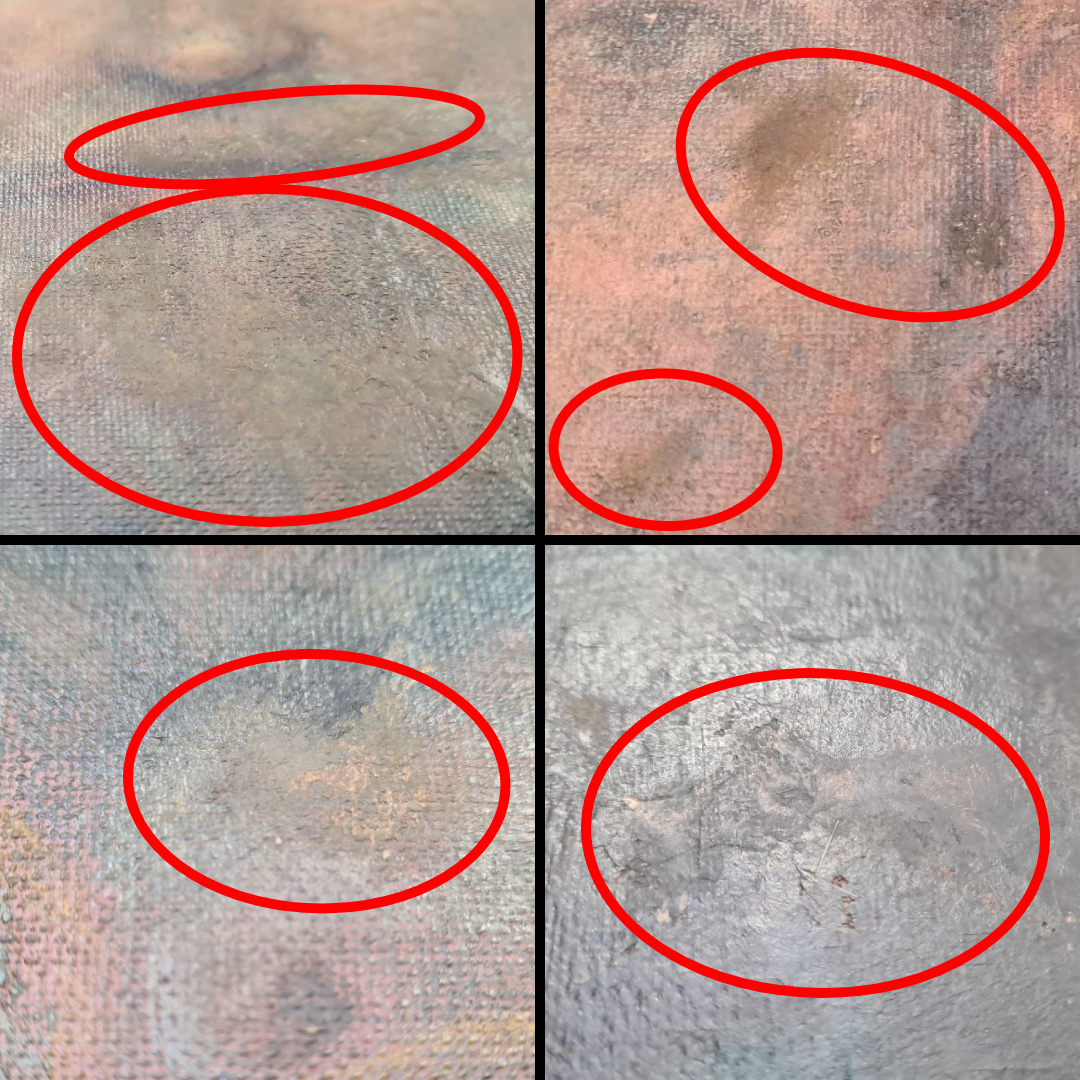
- Large-format painting setup
- Structural canvas stabilization
- Cleaning and image recovery
- Paint-loss reintegration and final protection
Client review - La fábrica Rieusset
“A complex project, a great result
We commissioned Alex to restore the portrait of the founder of the historic Rieusset factory. It was a complex project that required great precision and respect for the original artwork. The result exceeded our expectations.”