Restoring the Herboristeria del Rei paintings
More than 14 paintings by Francesc Soler i Rovirosa: a complex commission to conserve a historic Barcelona interior.
This project involved conserving more than 14 paintings by Francesc Soler i Rovirosa at the Herboristeria del Rei, one of Barcelona’s most distinctive historic shops. Soler i Rovirosa decorated its interior in 1858; today, these paintings form part of the city’s artistic and commercial memory. The shop also appeared as a perfumery in the film Perfume: The Story of a Murderer.
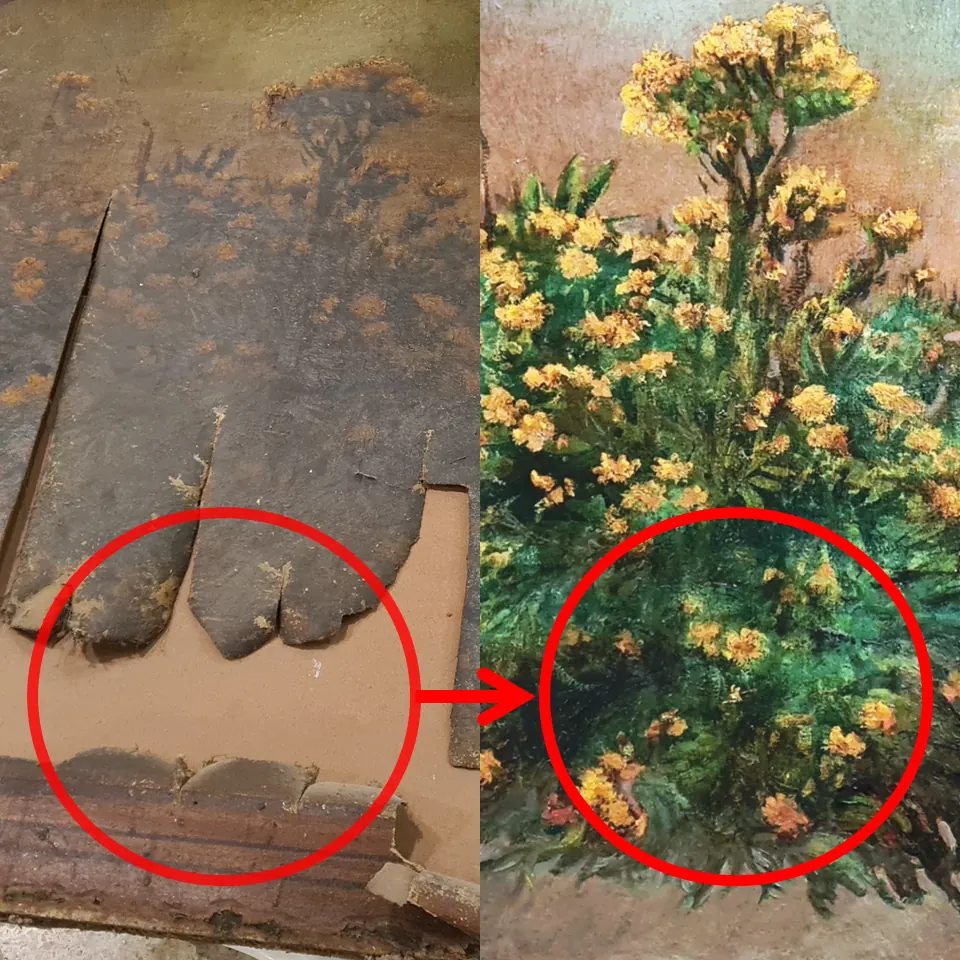
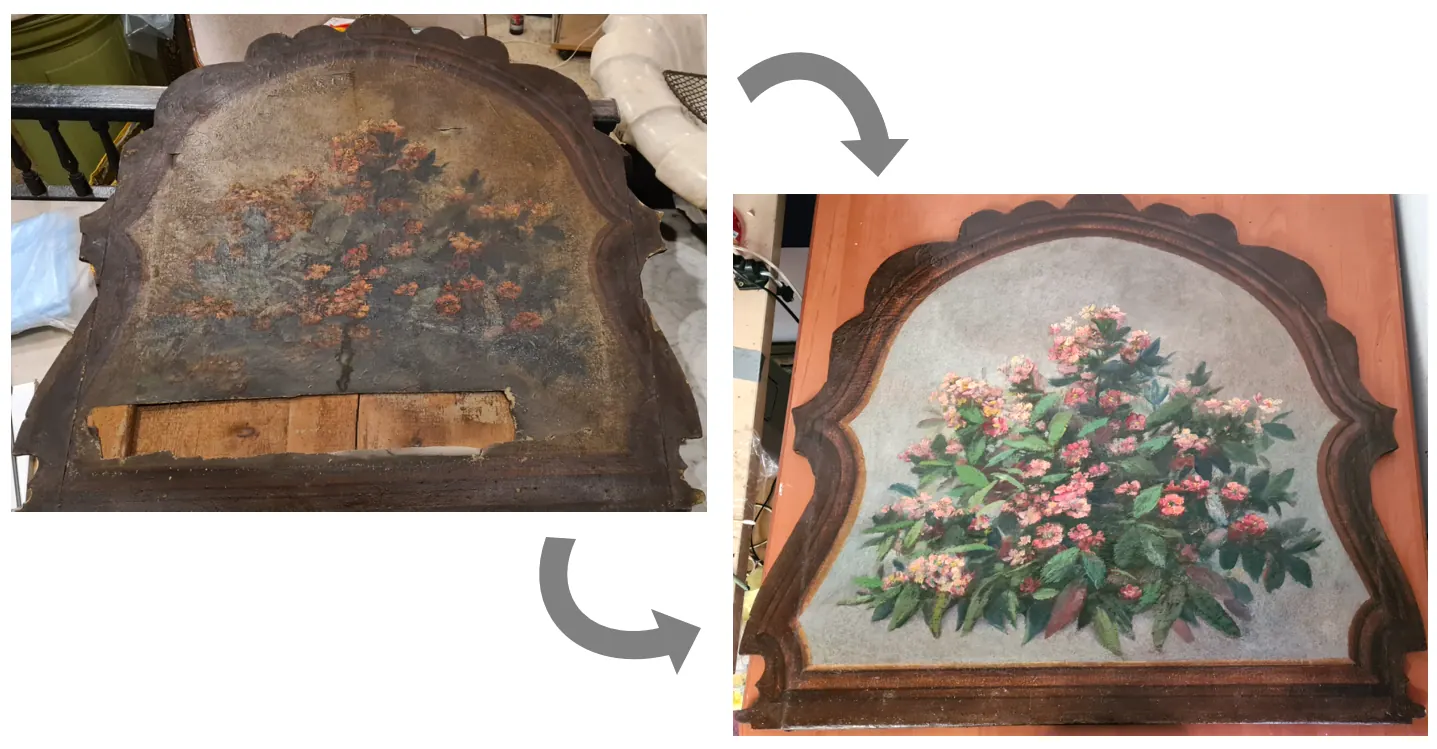
The paintings were in very fragile condition: dust and grime deeply embedded in the surface, aged varnish, paint losses and weakened canvases. This was not a simple or repetitive treatment: each work had its own problems, and the whole ensemble had to be conserved coherently.
A commission others turned down
Two restorers had declined the project before it reached my studio. I did not accept it because it was easy; I accepted the challenge because I could investigate each problem and look for an appropriate solution. Experience matters, but a project like this also calls for ingenuity, patience and the ability to change approach when the artwork demands it.
I was entrusted with more than fourteen paintings of great historical value. For me, that was both an honour and a serious responsibility.
The support: restoring stability to the canvas
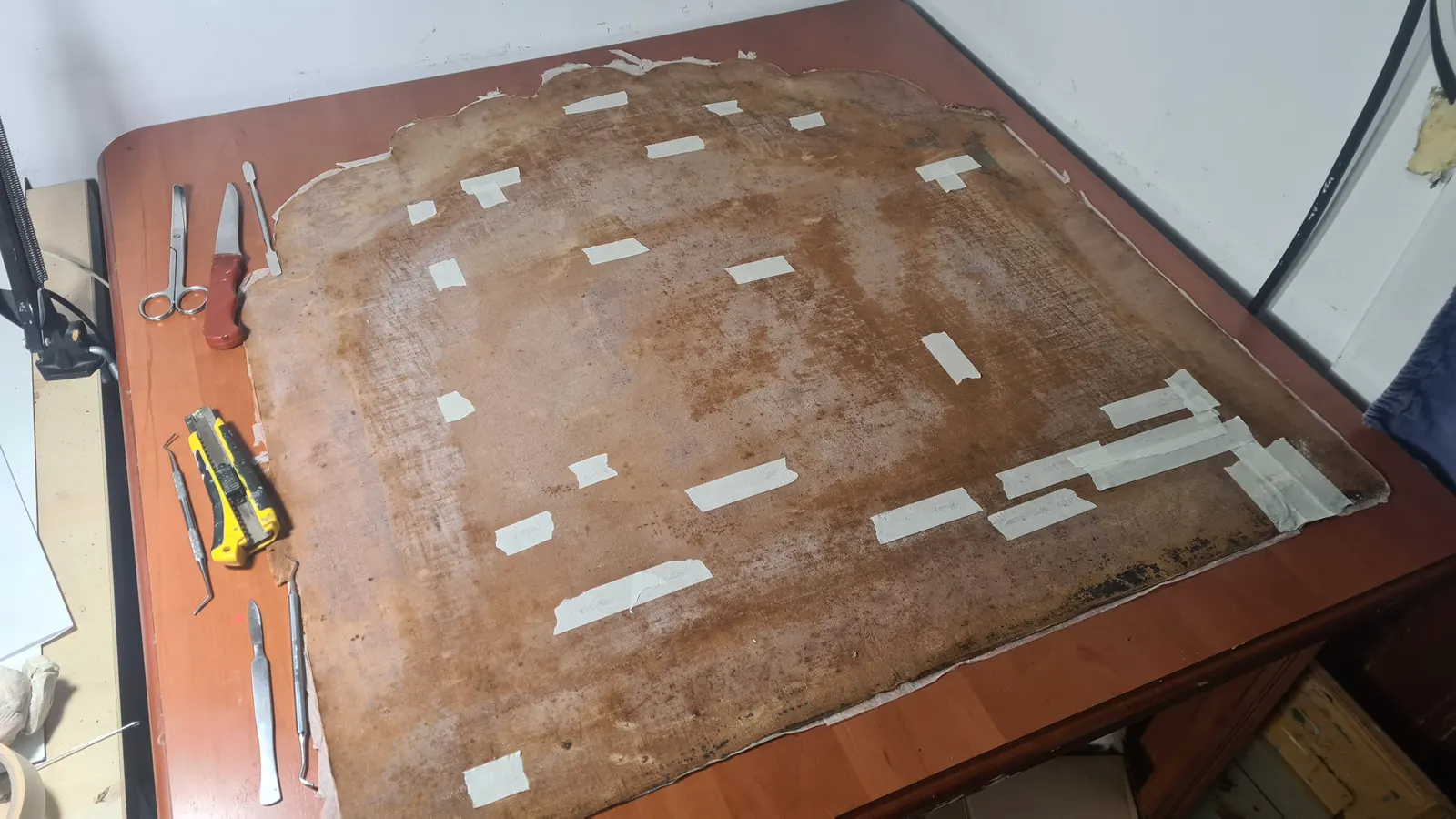
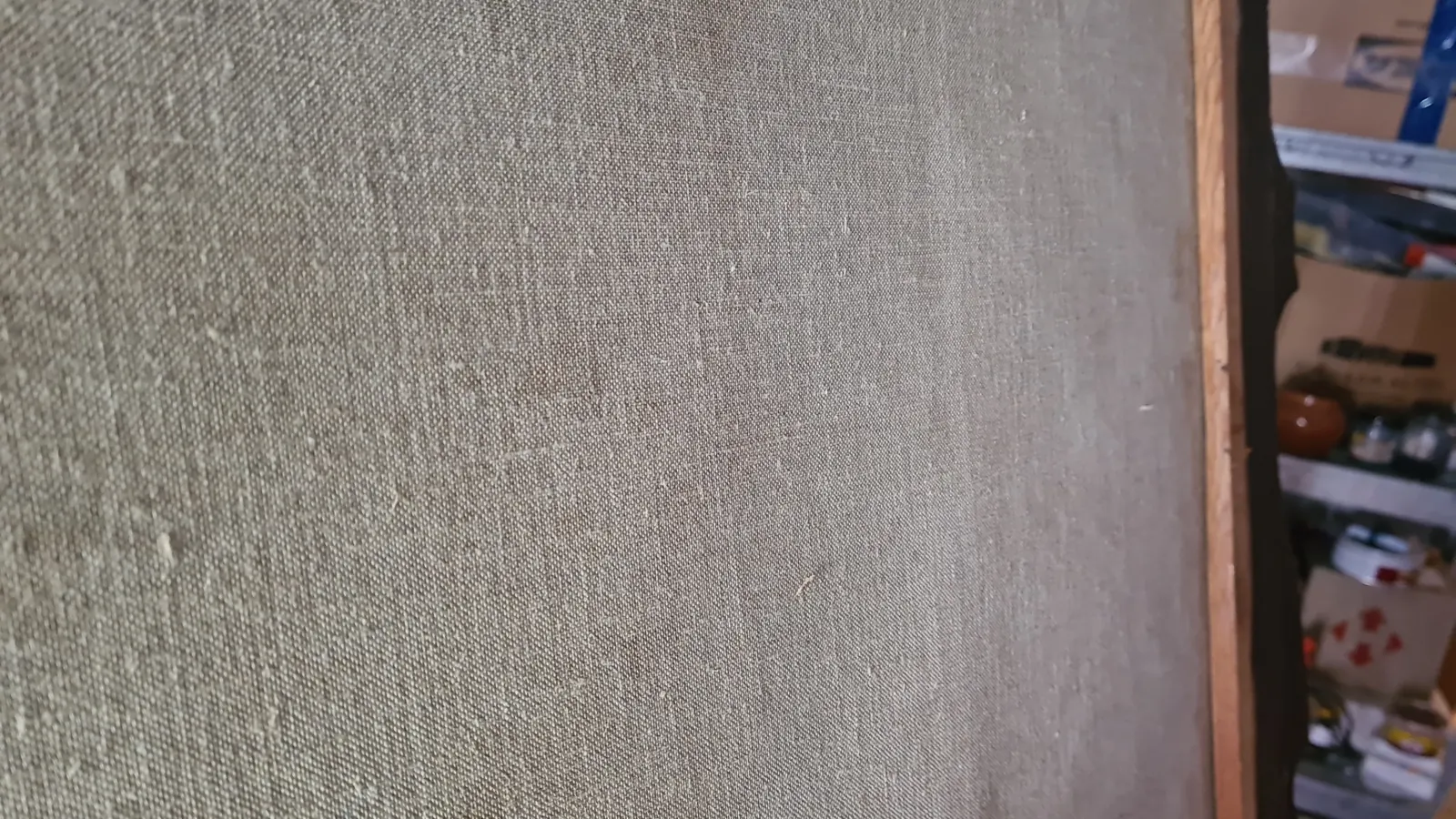
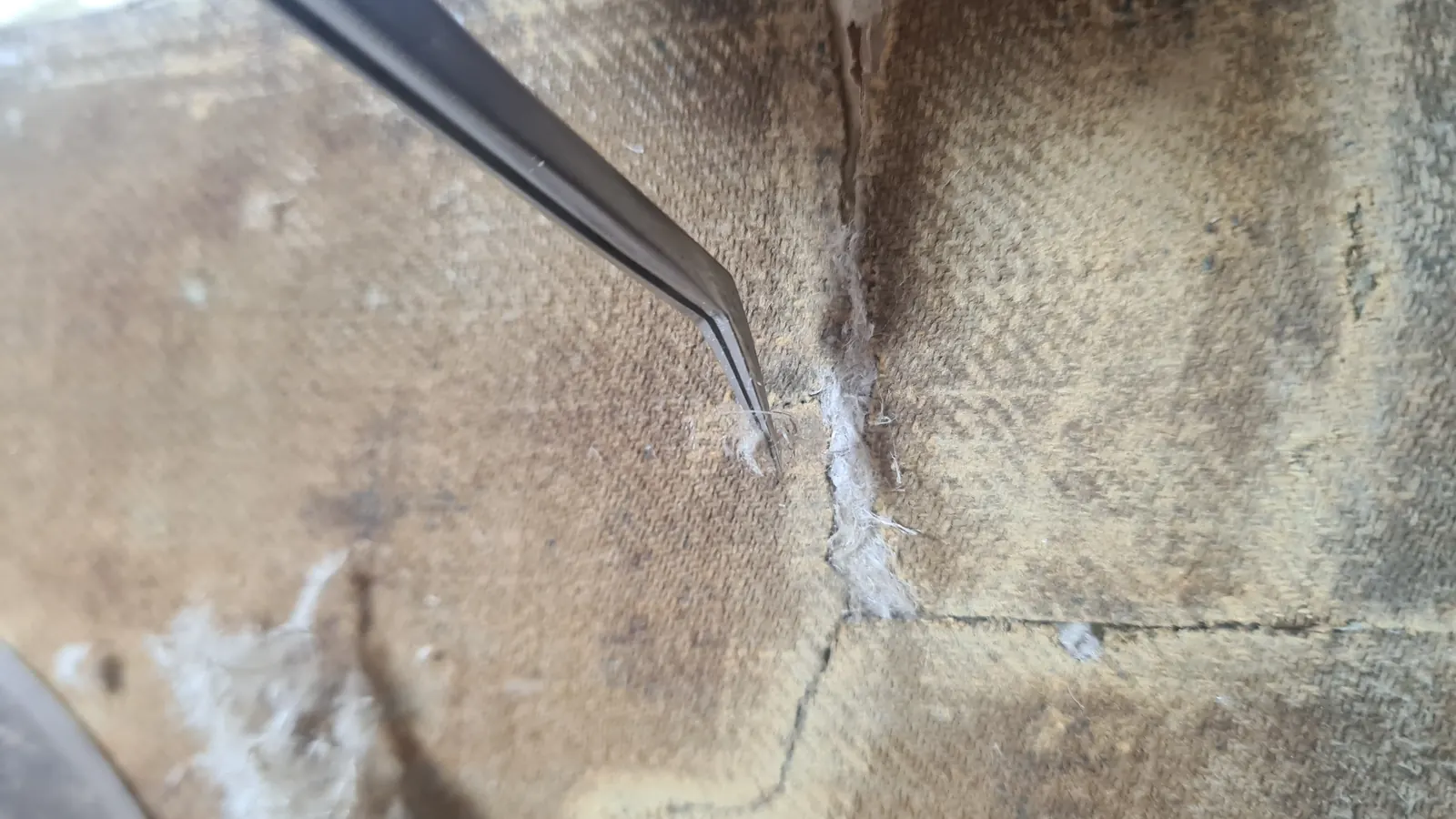
All the canvases required relining: a structural treatment in which a new supporting fabric is attached to the reverse of a weakened original canvas. It is not simply a matter of sticking on another piece of fabric. The bond and tension must remain controlled and even; otherwise, distortions and ripples can affect both the appearance and stability of the painting.
This work takes skill and precision. In this group, tears, fragile edges and weakened areas also had to be addressed while keeping in mind that every painting belonged to a historic decorative ensemble.

Cleaning and recovering losses
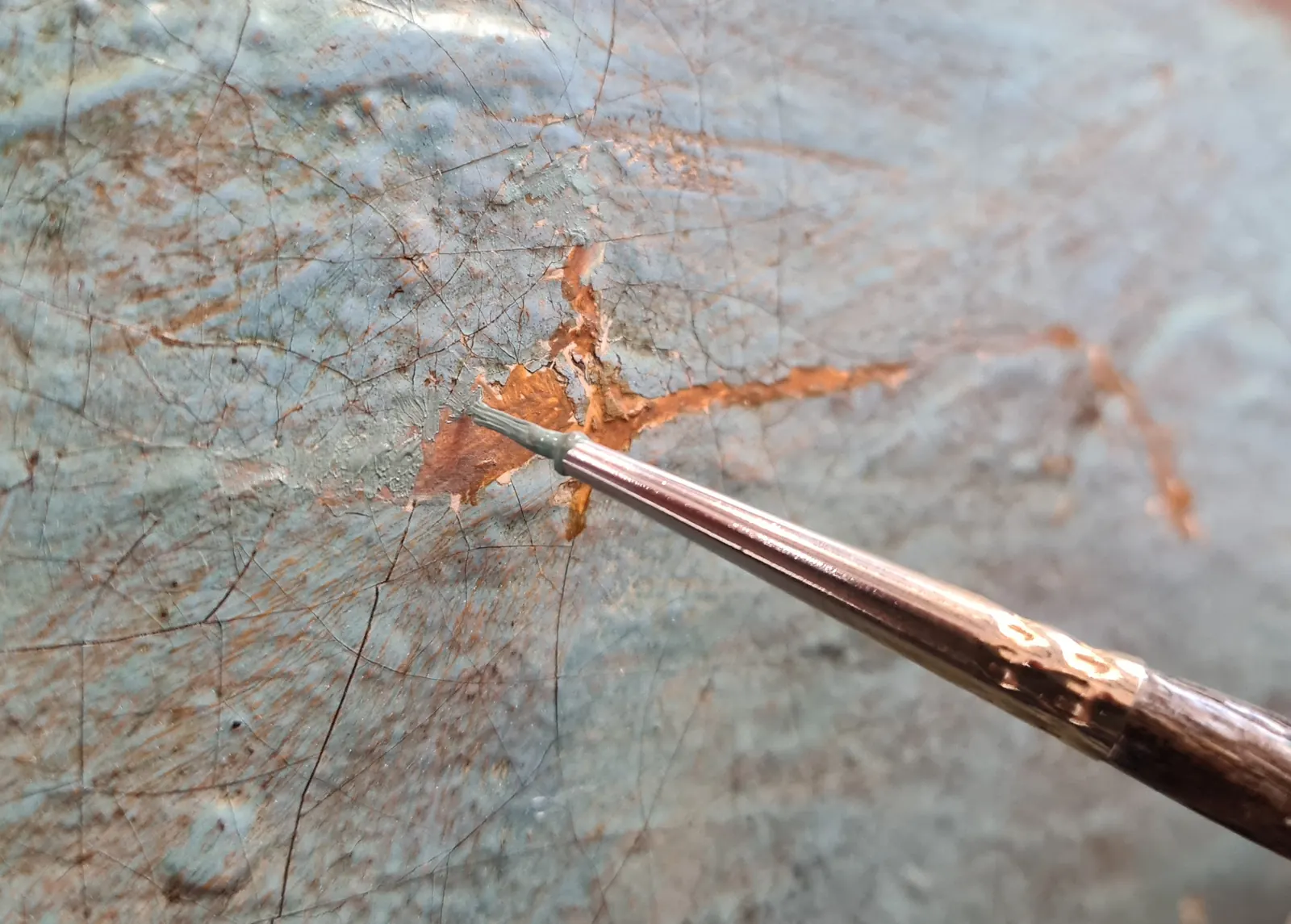
I gradually removed aged varnish and dirt accumulated over the years, including dust embedded in the surface. Cleaning was carefully controlled to preserve the original paint layer. Once the discoloured surface layers had been reduced, the paint losses and the true condition of each work became clearer.
Damaged areas were stabilized and losses were reintegrated locally. Retouching was confined to the losses: I did not repaint the original image or invent passages to make the paintings look new.
Trust is something you earn
I am especially proud of this project. Its complexity demanded more than following a recipe: I had to observe, test, adjust and solve practical problems without putting the paintings at risk. Every decision was made to conserve the works and extend their life.
Retouching was limited to losses and carried out with reversible materials; the original paint was preserved without overpainting. Responsible restoration does not remake a painting so that it looks new. It stabilizes what is at risk and helps the image read again while respecting its history.
- Relining and canvas stabilization
- Removing aged varnish and ingrained dirt
- Consolidation and reintegration of paint losses
- Final protection and preventive conservation
Client review - Miquel Casademunt Vallés
“Trust for your most valuable artworks
I trusted Alex to restore my collection of paintings to good condition. I appreciate that he uses quality materials and respects each artist’s vision and history. He works with passion and responsibility, which is why I always entrust him with my most valuable artworks.”